I spent an hour today with a 1734 English translation of Pierre Bayle’s Dictionnaire Historique et Critique. It is really a multi-volume encyclopedia, ostensibly covering both known and obscure topics found treated in the history of ancient texts, but in fact Bayle sneaks in commentary on religious and philosophical controversies of his own day. It’s a big, beautiful volume:
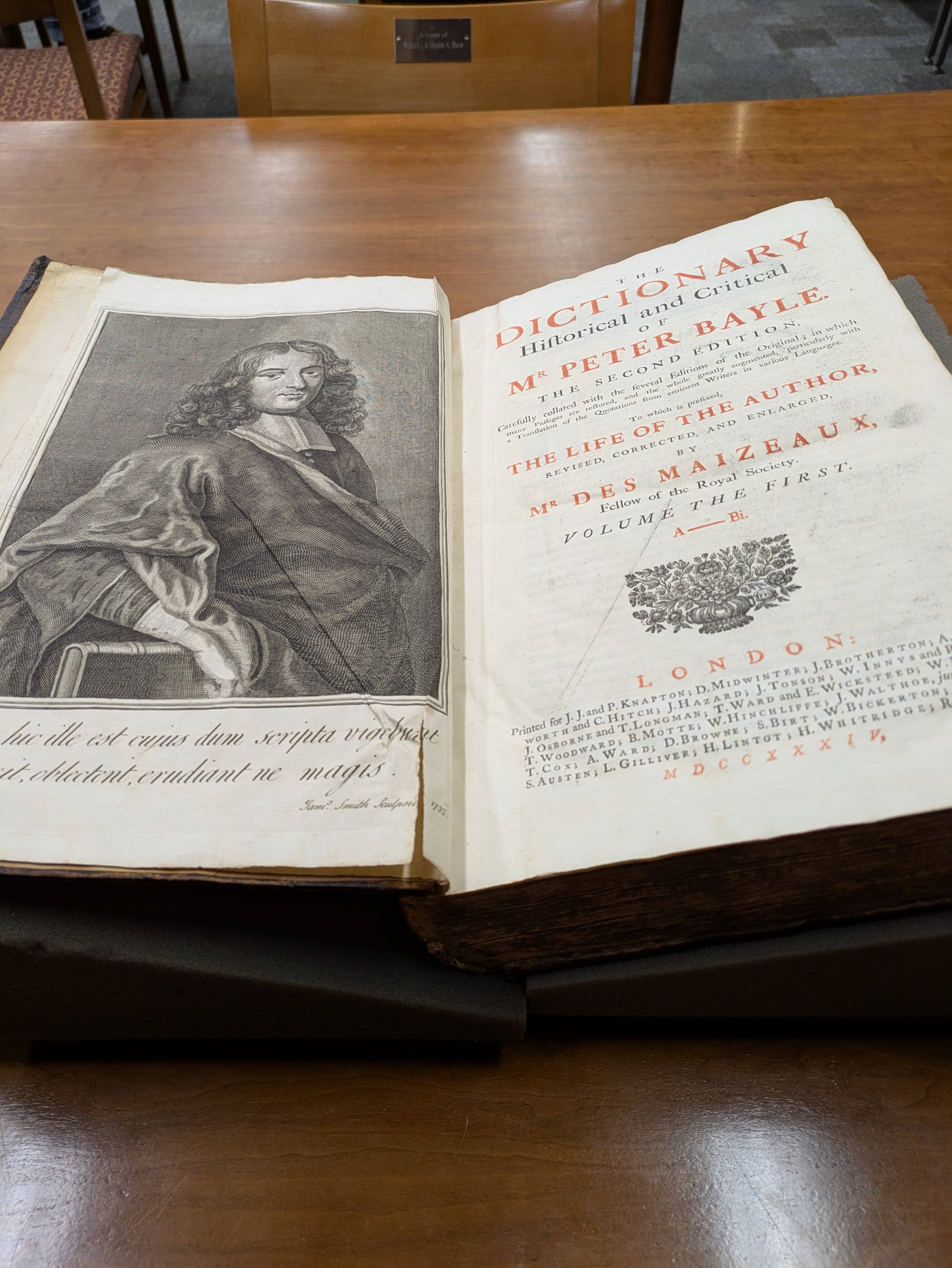
Some background on Bayle, courtesy of Wikipedia: “A Huguenot, Bayle fled to the Dutch Republic in 1681 because of religious persecution in France.Bayle was a notable advocate of religious toleration, and his skeptical philosophy had a significant influence on the subsequent growth and development of the European Age of Enlightenment.” I would add to this that, alongside his skepticism, he had a dry wit that Hume also had, about a half century later.
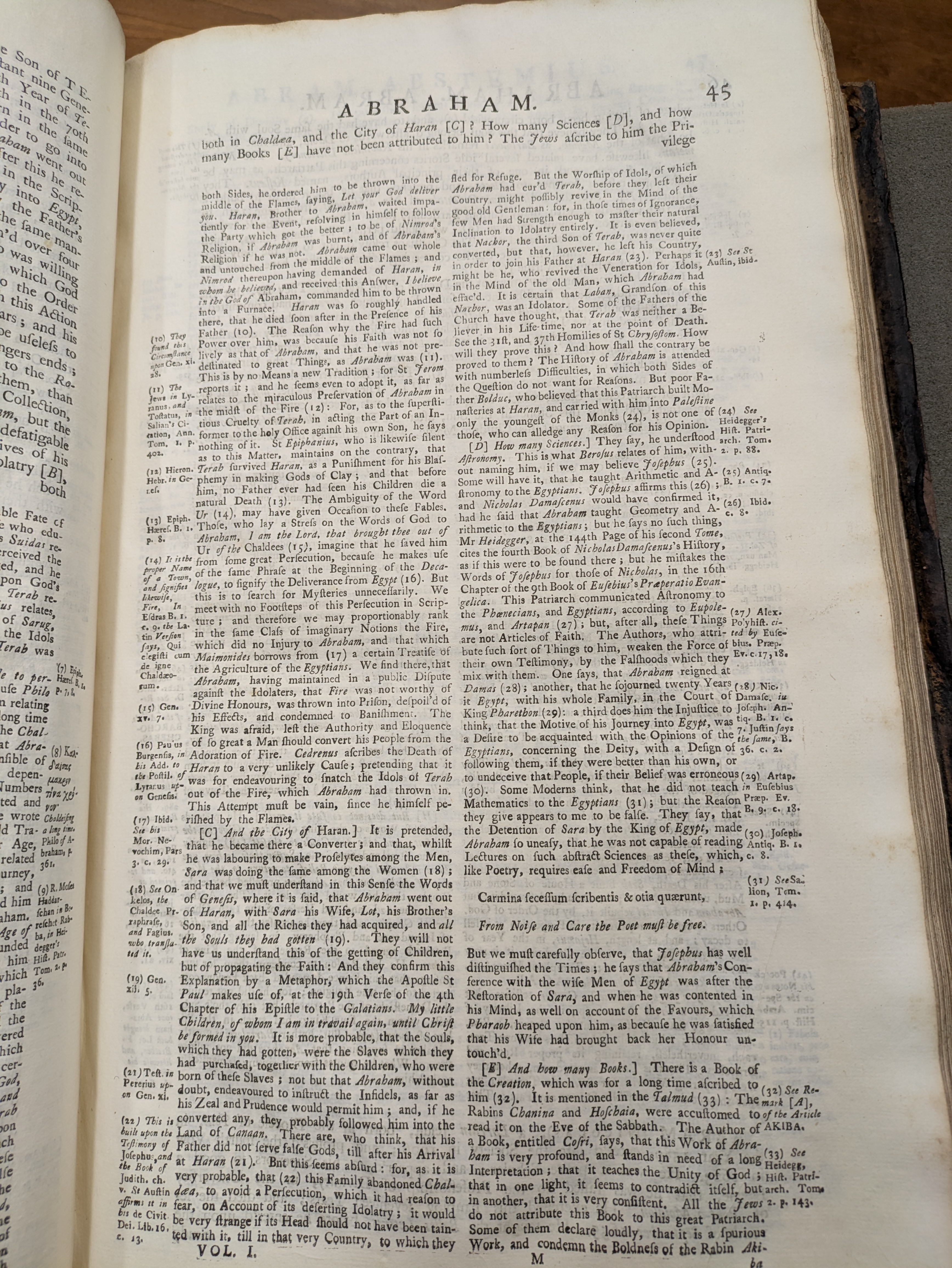
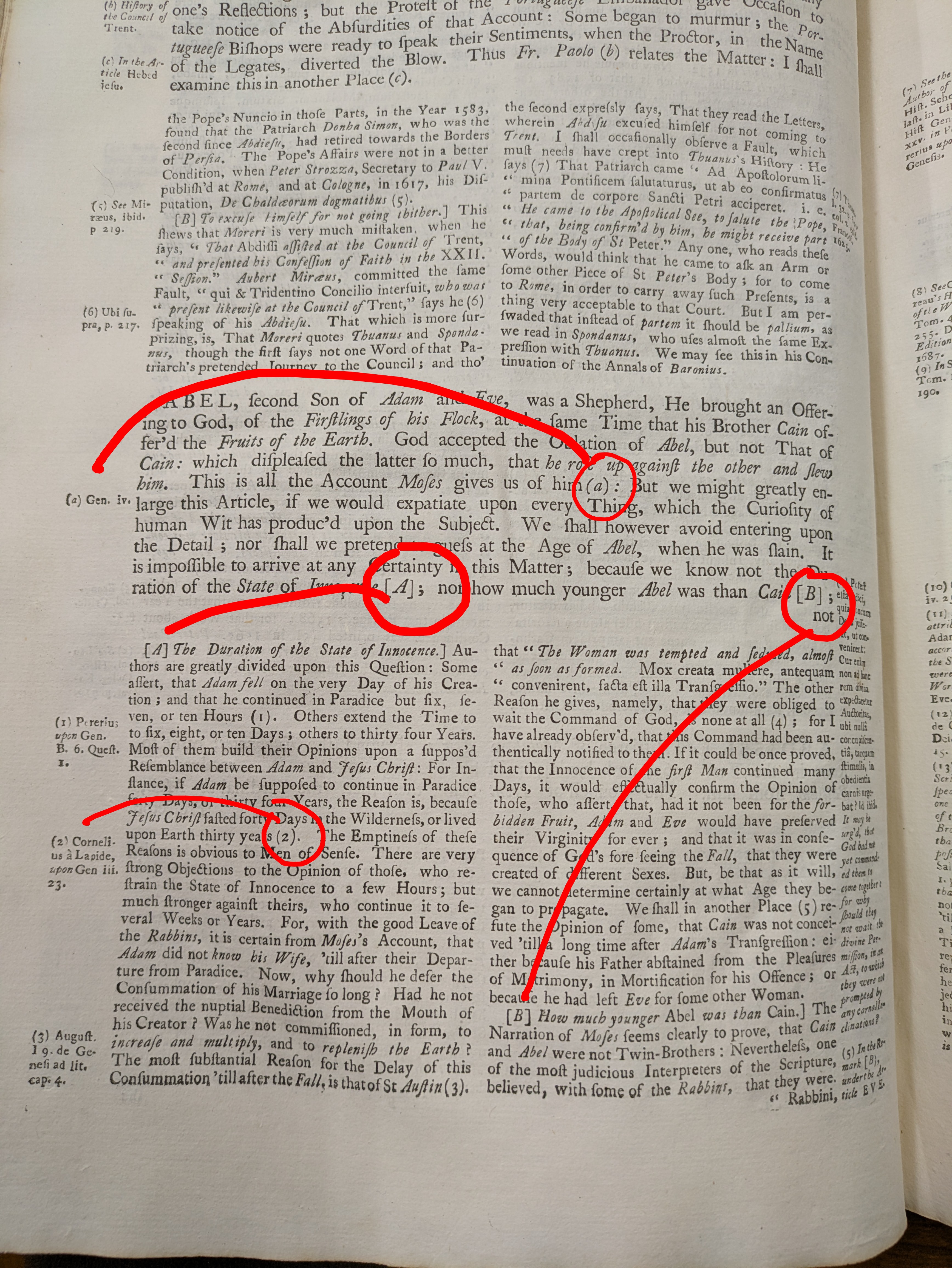
A prominent feature of Bayle’s dictionary is that his text has footnotes that scrupulously document his sources, and then other footnotes that allow him to go on LENGTHY tangents. In the page below, the first two lines are the text, and the rest of the page is devoted to his footnotes:
It takes a bit of care to sort out what each footnote is doing, and what level of the story you are in:
The overall effect of the work is that, sitting next to a candle with nothing else to do on a long 18th-century evening, you feel free to chase down every rabbit hole Bayle has the genius to devise. At one point, in a long footnote to the entry on “ADAM”, Bayle is explaining the cadre of scholars who claimed not only that Adam had all the knowledge of all scholars and more, but was gigantic in size; and while recounting someone’s tour of Egypt, Bayle relates (quoting “Mr. Monconis”) that the tour guides pointed out the place where Adam first laid with Eve:
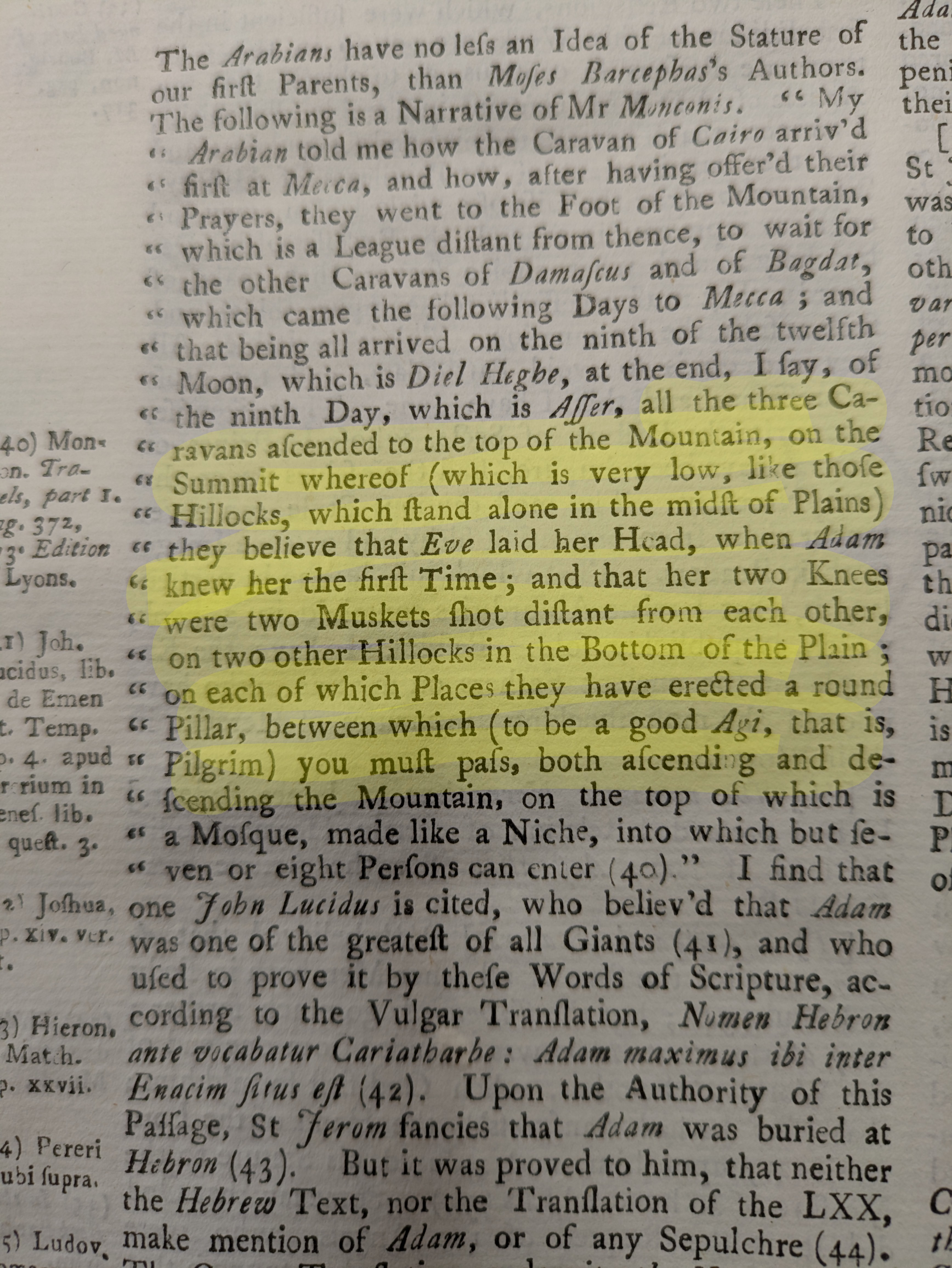
“…on the summit thereof (which is low, like those hillocks that stand in the midst of plains) they believe that Eve laid her head, when Adam knew her for the first time; and that her two knees were two muskets shot distant from each other, on two other hillocks in the bottom of the plain…” That Bayle gets away with including the “two muskets shot” line while describing the landscape of Adamic scholarship gives a good sense of his delightful combination of scholarly seriousness and schoolboy mischief.


 Huenemanniac
Leave a comment