I was able to spend some time today with a 1640 edition and translation of Francis Bacon’s Advancement of Learning. Bacon has been fascinating me for some time, mainly because I know that he was important, but whenever I read him, I could not see why. His writing seems pedantic, long-winded, and nearly vacuous. He is the sort of author that breaks a topic into 21 subcategories, and then carefully explains them one by one. Bacon’s tedious style did not go unnoticed in his own day: William Harvey said he wrote natural philosophy like a Lord Chancellor, and James I likened Bacon’s work to the peace of the Lord, as “it surpasseth all understanding.”
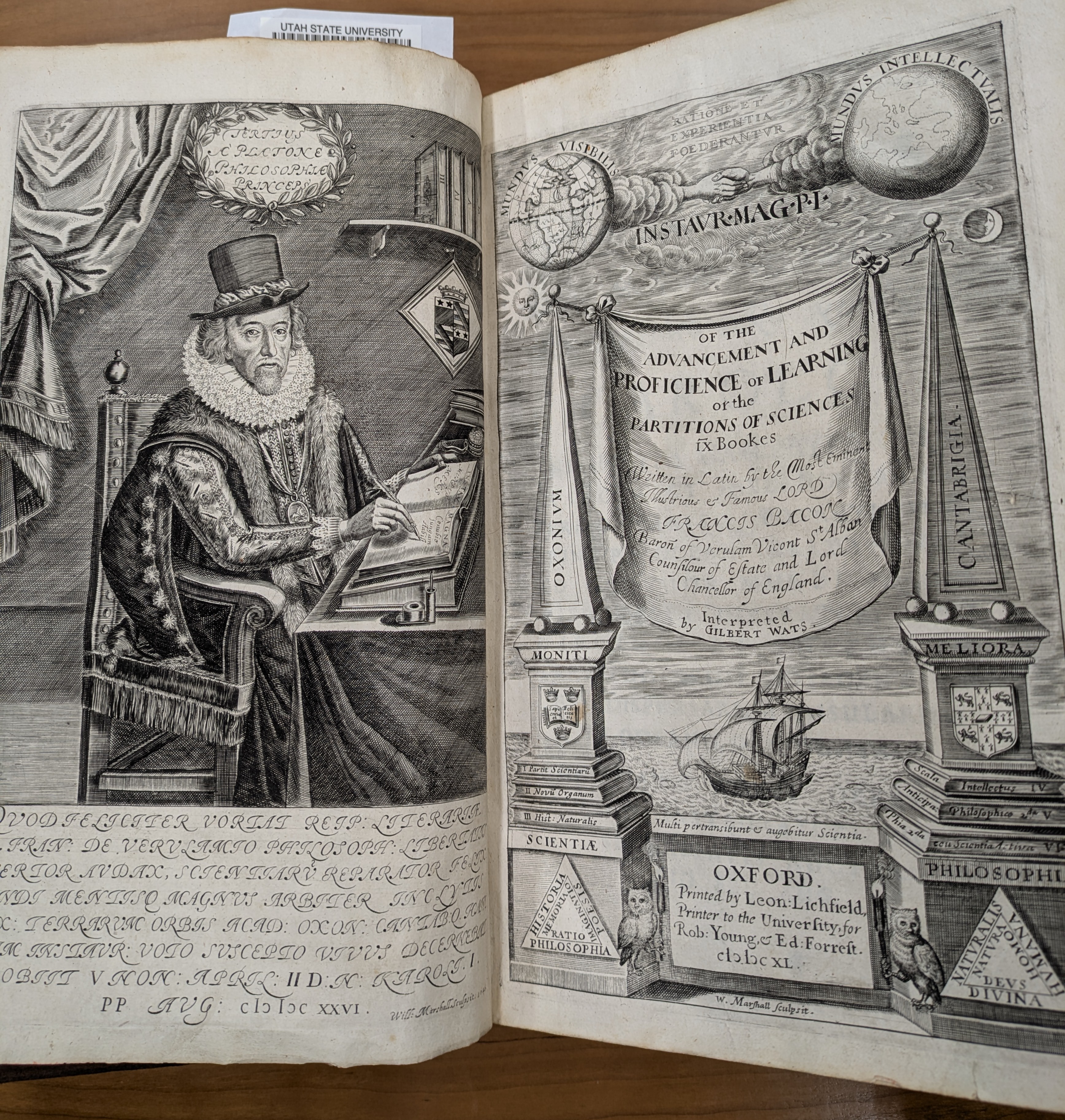
But, at long last, I am beginning to see the brilliance. In brief, Bacon was a prophetic voice in altering what it means to make progress in understanding nature. There is some truth to the claim that, for centuries, Europeans had supposed that the best kind of knowledge was the kind that did not change. Though there were many, many critical discussions of Aristotle, and Aristotelianism developed in significant ways over the centuries, it was nonetheless understood that the truth about the natural world would fall somewhere within the broad range of Aristotelian thought, and this was believed to be good: for Aristotle’s thought had come from a more enlightened time, and it had stood the test of time.
But by the time 12-year-old Bacon went to college, the number of problems and lapses in Aristotle’s natural philosophy had become intolerable, even ridiculous, and scholars had been forced to retreat into erudite theoretical niceties that were pretty well useless for any application to the real world.
No one is ever the first to do anything, it seems, but Bacon was among the first (or just the most widely known, in time) to call for breaking the old system wide open. He believed that a proper science would be based on gathering careful observations, putting forward tentative theories, and checking them rigorously in experiments, and leaving the door wide open to future revisions. Progress was not a matter of stasis, but change. The ideas he came up with not all that promising, by our lights, but his attention to experience and experiment, and revision, was carried by many natural philosophers into the 17th century, to great effect.
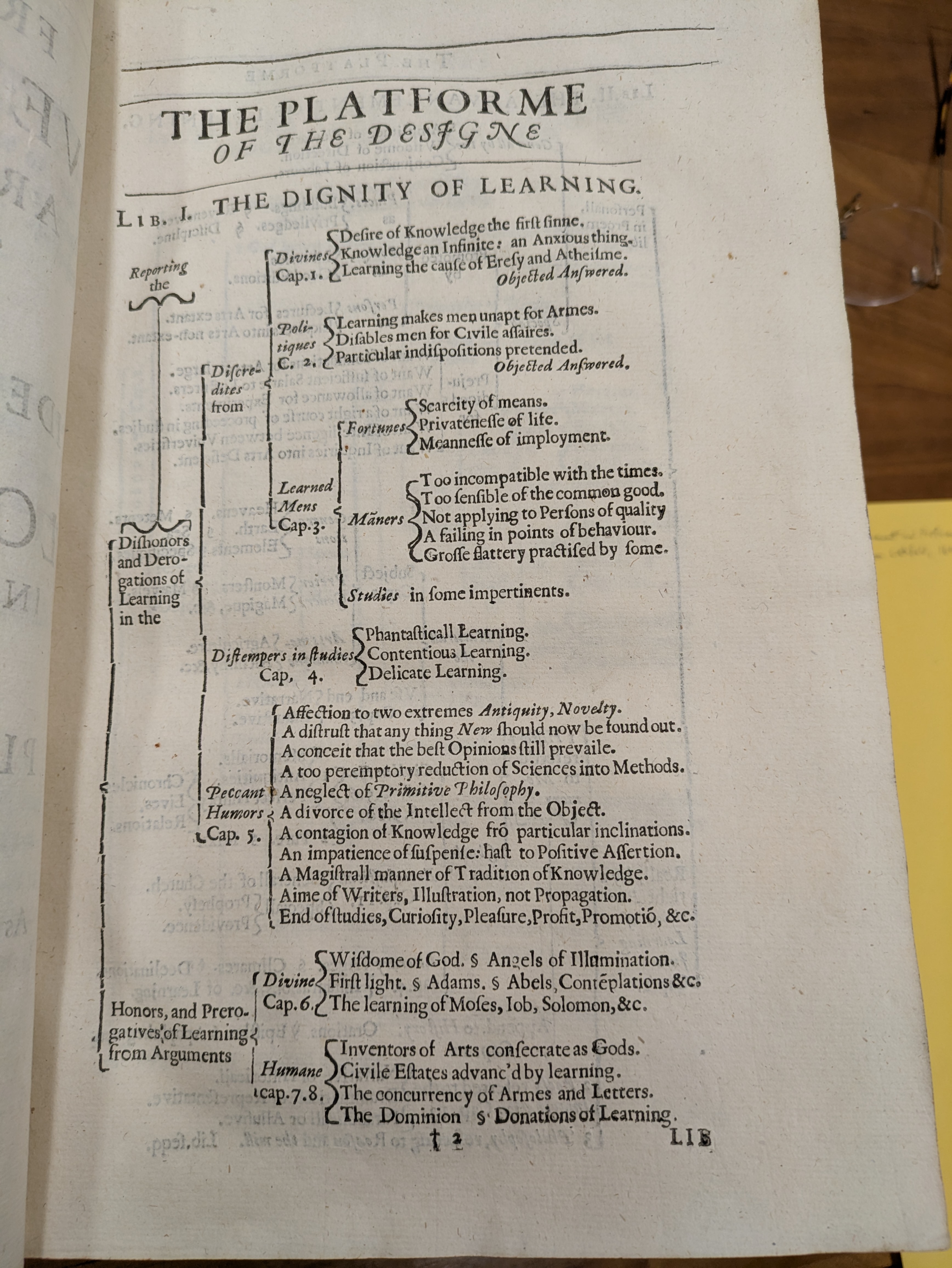
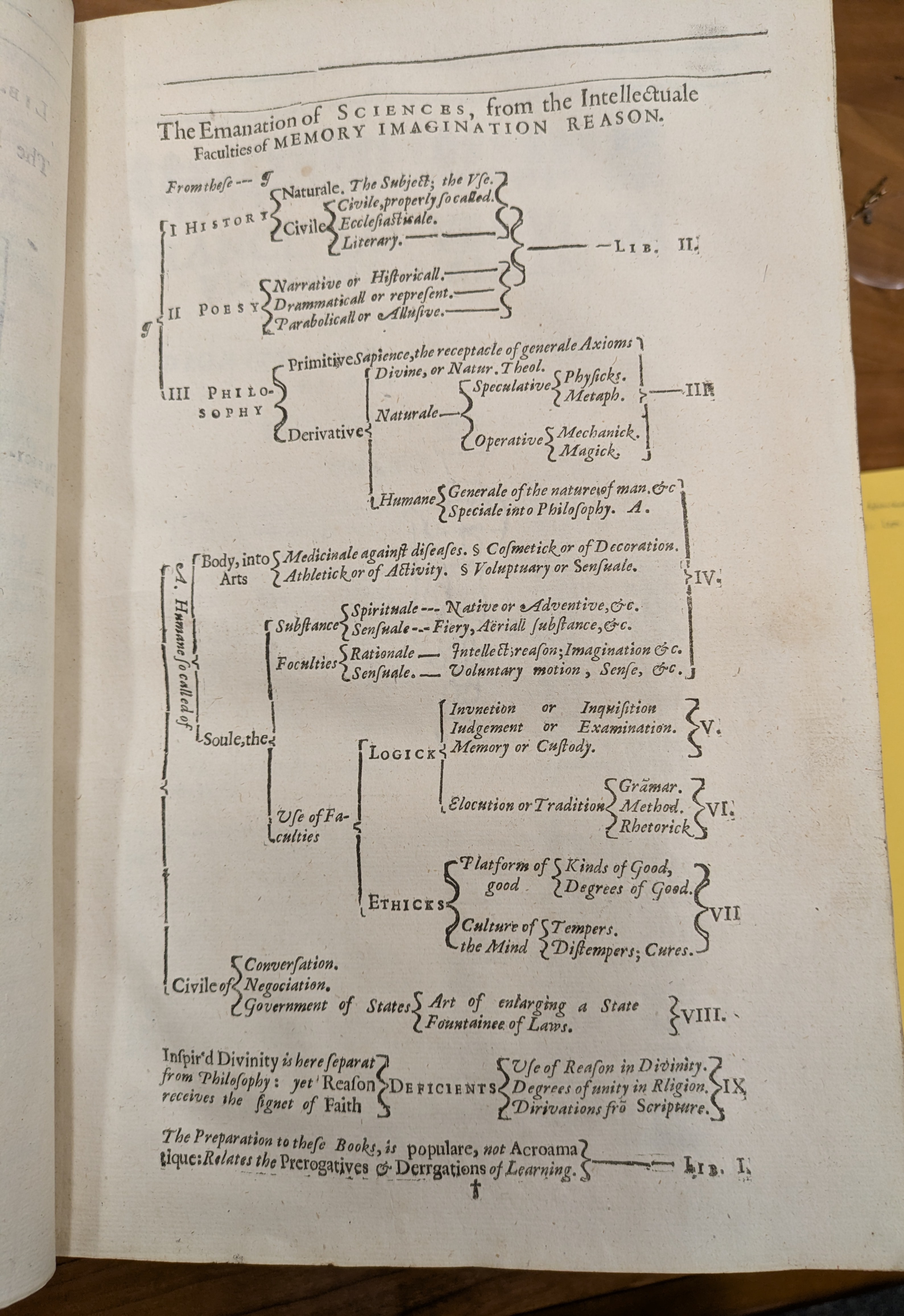
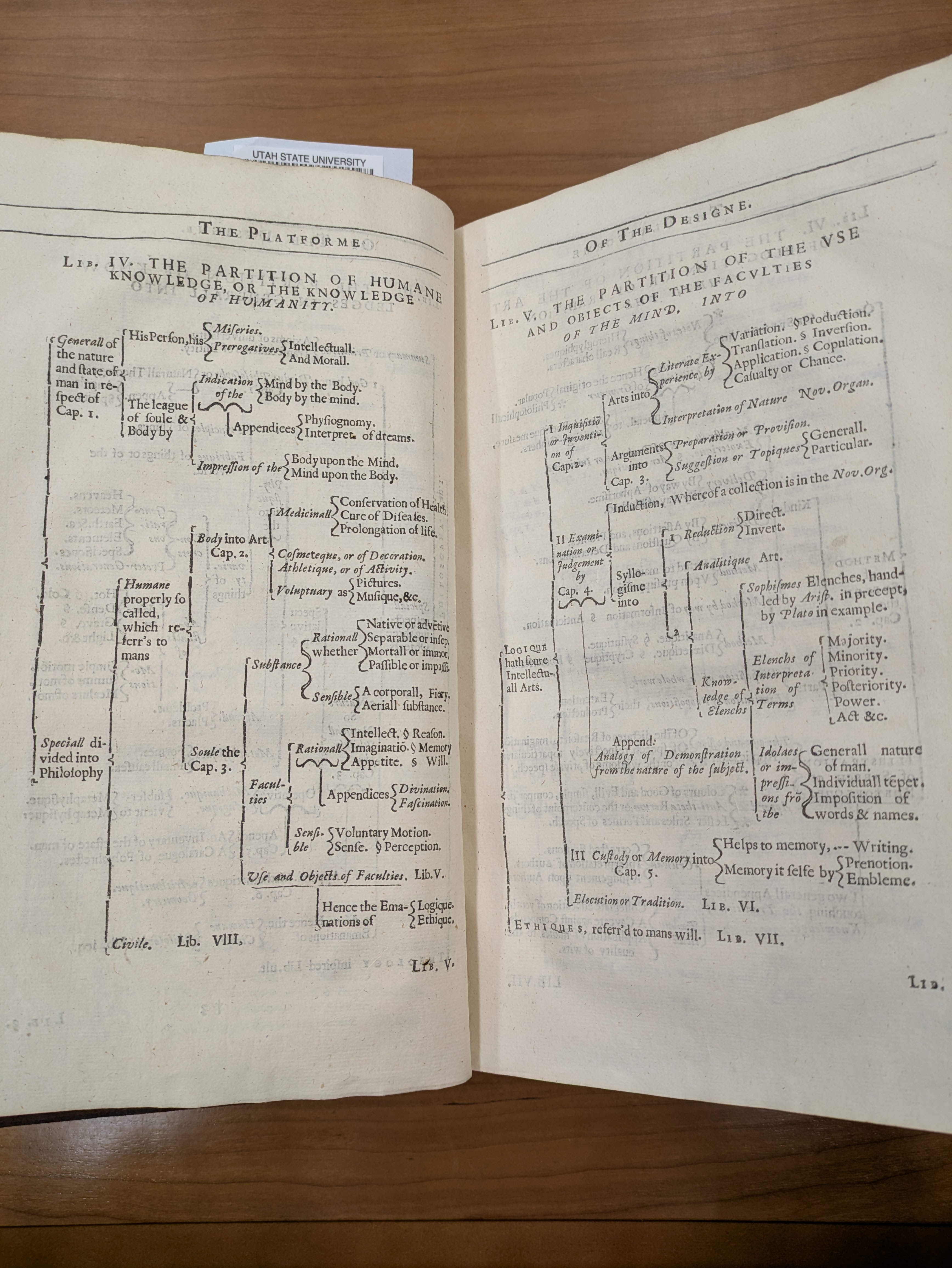
And, boy howdy, did this guy like to organize:


 Huenemanniac
Leave a comment