[Reading George W. Stocking, Victorian Anthropology (Free Press, 1987)]
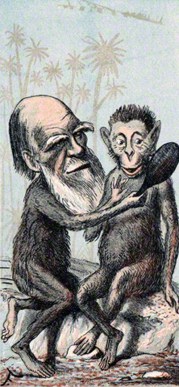 Stocking’s book is most centrally about how 19th-century upper-class British males managed to combine their sense of superiority with an emerging awareness of Darwinian evolution. Many loose threads needed to be woven together: there was the Bible, with its story of Adam and Eve and the Flood; there was a growing awareness of the deep differences among humans around the globe; there were the beginnings of modern linguistics, physiology, genetics, and psychology; and, finally, there were the established practices of subjugation, both abroad (in colonies) and at home (women, children, the poor). Some argued for polygenesis, or the theory that different sorts of humans originated independently. Some argued for degeneration, or the claim that humans began in some elevated condition, and while some lapsed into a long, downward trajectory, others managed to flourish thanks to good physiology and moral character. And some, finally, argued that the Bible shouldn’t be read as history, and humans started off as apelike creatures and evolved in different ways, with the proper Victorian gentleman serving as an exemplar of just how far a species can go, when blessed with opportunity and grit.
What these various approaches shared was the familiar human predicament of trying to put together a plausible, scientific view of human beings while living under the skewed optics of some domineering cultural paradigm. The stories they ended up telling were no different than the self-serving myths any group develops in advertizing its own origins. These stories were then employed to justify the ways in which power was allocated in their society –
Living is a society which was, and saw itself, in rapid transition, Victorian intellectuals managed to live with paradox, and even to savor it. But this paradox was one for which evolutionary thinking in fact provided a resolution. If there were still residual inequalities based on gender, class, or race in mid-Victorian society, this was a reflection of the inevitable unevenness of the process of development, whether individual, civilizational, or biological. If those whose status was unequal were also those whose mental development had not yet achieved the rational self-control and foresight on which individual freedom ought to be premised, then there was no paradox in denying them full participation in civilized society, until such time as (if ever) their mental development justified such participation. (p. 230)
The “white man’s burden” was to take on the project of civilizing those unfortunate beings who for whatever reason had not climbed as high up the evolutionary tree. This meant tearing them away from their pre-industrial conditions, teaching them manners, and fast-tracking them to the workhouses. In the case of women, it meant responding sympathetically to their weakened physiological condition, and trying to help them resist the degenerate, erotic lunacy into which they lapsed without a man to rule over them. A Darwin-esque worldview became the rationale for truly horrific practices and policies.
We can see now more fully what they were up to, and we know now that Darwinian evolution, properly apprehended, does not in any way legislate these attitudes. (That’s not to say, of course, that we’re not still up to the same monkey business, as the inequalities around the globe are chalked up to market forces, local inefficiencies, and irrational resistance to liberal capitalism.) But when you’re in the thick of things, it is extremely difficult to see the ways you’re being played – by others and by yourself.


 Huenemanniac
Leave a comment